10 Conversion Rate Optimization Best Practices for High-Converting Sites

Updated: Mar 7
In today's competitive market, attracting traffic is only half the battle. The real challenge, and the greatest opportunity, lies in converting that hard-won attention into loyal, high-value customers. This is where mastering conversion rate optimisation (CRO) becomes a non-negotiable asset for any ambitious SaaS, B2B tech, or e-commerce brand. Sustainable growth isn't about guesswork; it's about systematically improving the user journey at every touchpoint.
This guide moves beyond generic tips and vague advice. Instead, it offers a prioritised, actionable roundup of the most impactful conversion rate optimization best practices that drive measurable results. We will explore everything from hypothesis-driven testing and deep funnel analysis to subtle user experience (UX) fixes and strategic pricing experiments. To truly drive sustainable growth and convert clicks into customers, regularly conducting a thorough conversion rate optimisation audit is crucial for identifying bottlenecks before you begin testing.
You will gain the frameworks, templates, and real-world examples needed to build a powerful, repeatable growth engine. We'll cover everything from A/B testing and landing page design to form field reduction and product onboarding flows. Whether you're refining a product-led motion, scaling a sales-led strategy, or optimising an e-commerce checkout, these insights will equip you to turn user engagement directly into revenue. Let's dive into the practices that transform potential into performance.
1. A/B Testing and Multivariate Testing
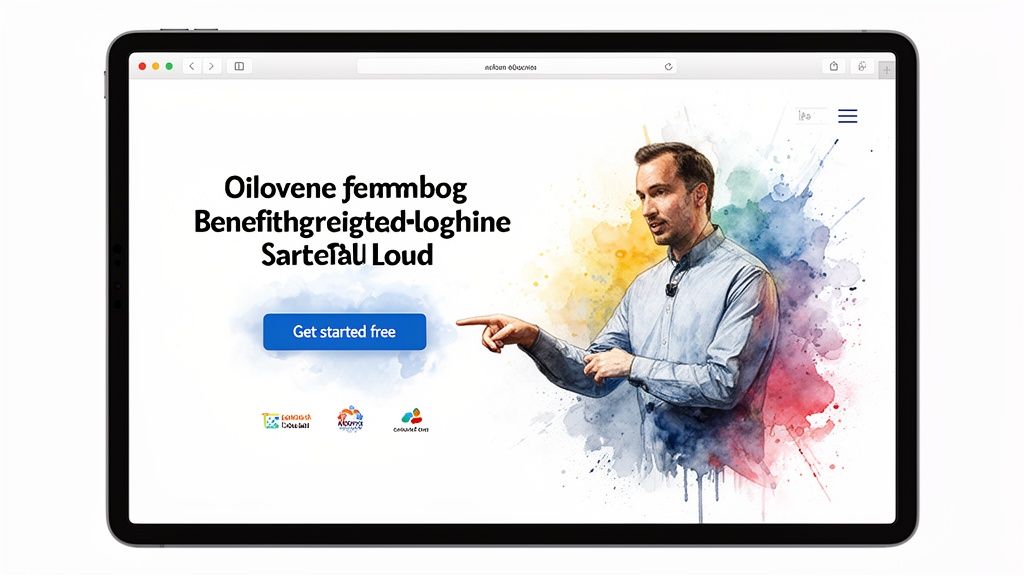
A foundational practice in conversion rate optimisation, systematic experimentation involves comparing two or more variations of a webpage, email, or app screen to determine which one performs better. A/B testing, the most common form, isolates a single variable (e.g., a headline or call-to-action button colour) to precisely measure its impact. This data-driven approach removes guesswork from your marketing and product development.
Multivariate testing, in contrast, examines multiple variables and their combinations simultaneously to identify which combination yields the best outcome. This is particularly useful for complex pages like pricing or homepages where several elements interact. For any SaaS or e-commerce business, this continuous testing fosters a culture of iteration that compounds improvements over time, turning small wins into significant revenue growth.
Why A/B Testing is a Top Practice
Relying on assumptions is one of the most expensive mistakes a business can make. Systematic testing provides empirical evidence to guide decisions. For example, HubSpot discovered that removing a single optional phone number field from their sign-up forms dramatically increased submission rates. Without a controlled test, they might have assumed collecting more data was always better.
Key Insight: A/B testing isn't just about finding a 'winner'. It's about understanding your audience's behaviour and motivations, which provides invaluable insights for future marketing, product, and sales strategies.
How to Implement A/B Testing
Prioritise with a Framework: Use a model like the PIE framework (Potential, Importance, and Ease) to score and rank your test ideas. Focus on high-traffic, high-impact pages first, such as your pricing page or trial sign-up form.
Formulate a Clear Hypothesis: A strong hypothesis follows a simple structure: “If we [change X], then [metric Y] will [increase/decrease] because [reason Z]”. This clarifies your goal and rationale.
Use Statistical Calculators: Before launching, ensure your test has a large enough sample size to achieve statistical significance. Running an underpowered test will lead to unreliable results.
Run for Full Business Cycles: Let your test run for at least one to two full business weeks to account for natural fluctuations in traffic behaviour between weekdays and weekends.
Document Everything: Maintain a centralised repository of all tests, including the hypothesis, variations, results, and learnings. This institutional knowledge is crucial for long-term success.
2. Funnel Analysis and Conversion Funnel Optimisation
Funnel analysis is the systematic examination of the entire customer journey, from their first touchpoint to the final conversion. It involves mapping out each stage-awareness, signup, onboarding, activation, and monetisation-to pinpoint exactly where users are abandoning the process. This practice is crucial for identifying the “leaks” in your conversion path, allowing for targeted interventions rather than scattered guesswork.
For SaaS and e-commerce companies, this means understanding not just the final sale or subscription, but also the critical micro-conversions along the way. These smaller commitments, like watching a demo video or adding an item to a wishlist, are strong indicators of user intent and provide valuable leverage points for optimisation. By visualising this journey, you can see where friction is highest and prioritise your efforts accordingly.
Why Conversion Funnel Optimisation is a Top Practice
Without funnel analysis, businesses fly blind, often optimising low-impact areas while major drop-off points go unnoticed. For example, Slack famously discovered that getting a team to send 2,000 messages was their key activation metric. By optimising their onboarding funnel to encourage this behaviour, they significantly improved user activation and long-term retention. This insight would be impossible to uncover without a detailed stage-by-stage analysis.
Key Insight: The biggest opportunities for growth often lie in fixing the weakest link in your funnel. A 5% improvement at a high-drop-off stage can have a far greater impact on revenue than a 20% improvement at an already well-optimised stage.
How to Implement Funnel Analysis
Define Clear Funnel Stages: Map your customer journey and define distinct stages with clear entry and exit criteria. For a SaaS business, this could be: → → → .
Establish Baseline Metrics: Use analytics tools like Mixpanel, Amplitude, or Google Analytics to measure the conversion rate between each stage. This baseline is your starting point for all future optimisation efforts.
Investigate Drop-Off Points: Use heatmaps and session recordings to understand why users are leaving at a specific stage. Are they confused by the UI, encountering a bug, or missing key information?
Track Micro-Conversions: Implement event tracking for important user actions that precede a major conversion. For an e-commerce site, this could include using a size guide or reading reviews.
Segment Your Funnels: Analyse funnels for different user segments (e.g., by traffic source, device, or user persona). You might find that mobile users struggle with your checkout process while desktop users convert smoothly.
3. Landing Page Optimization and Conversion-Focused Design
Strategic landing page design is a core discipline of conversion rate optimisation best practices, focusing on creating dedicated pages to maximise conversions for specific campaigns and audiences. Unlike a homepage that serves many purposes, a landing page has one singular goal. Conversion-focused design prioritises clarity, a powerful value proposition, and the removal of friction over general brand aesthetics, serving as the critical bridge between ad-driven traffic and a desired action.
High-performing landing pages are defined by their single-minded focus. They feature compelling, benefit-driven headlines, crystal-clear calls-to-action (CTAs), targeted social proof, and streamlined forms. For marketers running paid campaigns, optimising these pages is non-negotiable for achieving a positive return on ad spend and cost-effective customer acquisition. Companies like Unbounce have shown that well-optimised pages can achieve conversion rates exceeding 40%.
Why Landing Page Optimization is a Top Practice
Your ad can be perfectly targeted and your offer compelling, but if the landing page fails to deliver a coherent and persuasive experience, your investment is wasted. This is where message-to-market match is crucial; the promise made in your ad must be immediately fulfilled on the page. For instance, Intercom creates vertical-specific landing pages that speak directly to the unique pain points of different buyer personas, dramatically increasing relevance and conversion rates.
Key Insight: A landing page is not just a page on your website; it's a specialised tool built for a single conversation. Its success hinges on eliminating all distractions and guiding the user towards one specific outcome.
How to Implement Landing Page Optimization
Align Ad and Page Messaging: Ensure your headline and core message mirror perfectly the ad copy that brought the visitor to the page. This seamless transition builds trust and reduces bounce rates.
Prioritise a Single CTA: Every element on the page, from the copy to the images, should support one primary call-to-action. Remove competing links, navigation menus, and footers.
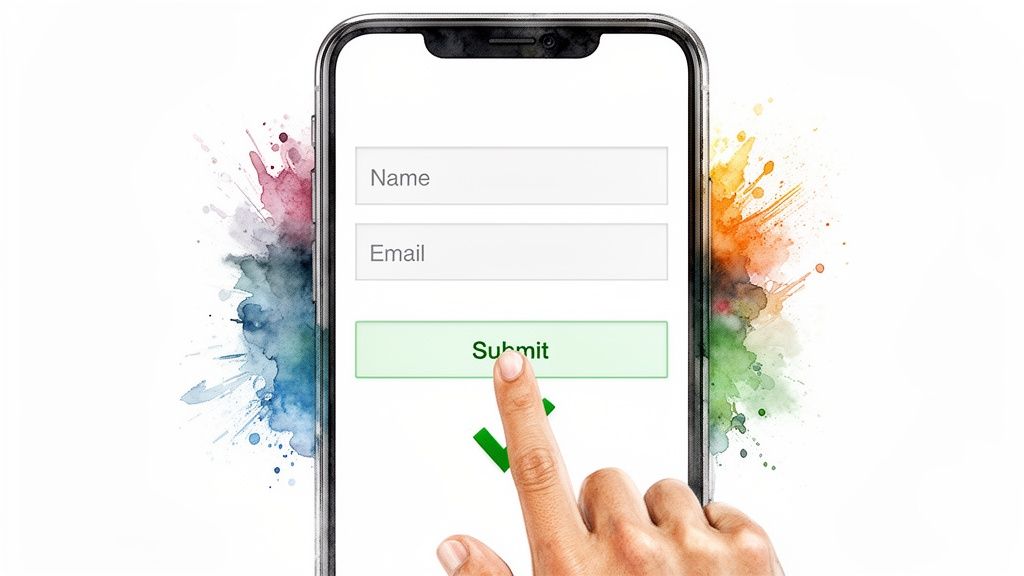
Minimise Form Friction: Only ask for essential information. Each additional field you add increases the likelihood of abandonment. Test removing optional fields like ‘phone number’ to see the impact.
Use Credibility Signals: Include targeted social proof like customer logos, a specific testimonial, or a relevant case study that speaks directly to the audience from the campaign. For a deeper dive, explore how to build high-conversion landing pages.
Optimise for Speed and Mobile: With over 60% of traffic coming from mobile devices, a mobile-first design is essential. Furthermore, ensure your page loads in under three seconds to prevent visitor drop-off.
4. Form Field Optimization and Friction Reduction
For any online business, the sign-up, or contact form is the final gateway to a new lead or customer. Strategic form optimisation focuses on systematically removing friction from this critical step by minimising fields, clarifying labels, and intelligently sequencing questions. Every extra field you ask a user to complete adds cognitive load and exponentially decreases the likelihood of submission.
This practice is arguably the highest-return-on-investment lever for SaaS and B2B companies, as it directly impacts user acquisition. By simplifying the initial sign-up, you lower the barrier to entry, which in turn reduces customer acquisition cost and improves onboarding conversion rates. Smart forms that leverage conditional logic, social logins, and pre-filled data transform a tedious task into a seamless experience, a key element of modern conversion rate optimisation best practices.
Why Form Field Optimization is a Top Practice
Forms are a direct transaction of information for value. The more information you ask for upfront, the higher the perceived 'cost' to the user. HubSpot famously discovered that reducing their form from four fields to three boosted conversion rates by nearly 50%. This demonstrates that even seemingly small changes can have an enormous impact when applied to a high-leverage conversion point.
Key Insight: Treat every form field as a potential point of failure. Your goal is not to gather all possible data at once, but to collect the minimum viable information required to move the user to the next step in their journey.
How to Implement Form Optimisation
Start with the Essentials: Begin with a 'minimum viable form', often just an email address and perhaps a password. For B2B, this might be a work email. Collect additional data like company size or role post-sign-up during the onboarding process.
Implement Social and Magic Logins: Reduce friction by offering one-click sign-up options via Google, GitHub, or LinkedIn. For password-less entry, consider 'magic links' sent to a user's email, which simplifies access.
Optimise for Mobile Inputs: Use the correct HTML input types to trigger the right mobile keyboards. For example, should show the '@' symbol, and should bring up a numeric keypad.
Use Conditional Logic: Employ tools like Typeform or Jotform to show or hide fields based on previous answers. This creates a more personalised and less intimidating experience for the user.
Provide Clear, Inline Validation: Instead of showing a list of errors at the top of the form upon submission, validate fields in real-time and show clear error messages directly beside the problematic field.
5. Personalization and Segment-Specific Messaging
Moving beyond a one-size-fits-all approach, this practice involves tailoring website content, offers, and messaging to specific audience segments. By leveraging data on user behaviour, demographics, or acquisition source, you can deliver dynamic experiences that resonate far more deeply. This increases relevance and significantly boosts the likelihood of conversion by speaking directly to a user's specific context and needs.
For SaaS and B2B tech firms, this means showing different value propositions to different personas, such as a developer versus a C-suite executive. E-commerce brands can use it to surface relevant product recommendations based on browsing history. This strategy transforms a generic user journey into a guided, personal conversation, making prospects feel understood and catered for.
Why Segment-Specific Messaging is a Top Practice
Generic messaging forces users to work hard to find relevance, leading to high bounce rates and missed opportunities. Personalization meets users where they are, acknowledging their unique pain points and desired outcomes. For example, Slack can present a developer-focused landing page to traffic from technical forums, highlighting API integrations, while showing a collaboration-focused page to visitors from a business publication. This immediate alignment between user intent and on-site messaging is a powerful driver of conversions.
Key Insight: Effective personalization isn't about using a visitor's first name. It's about demonstrating a deep understanding of their role, industry, or challenges and presenting your solution as the most logical, purpose-built answer.
How to Implement Personalization
Define Key Personas: Start by identifying 3-5 core audience segments based on revenue potential and acquisition channels. Create clear profiles for each, detailing their goals and pain points.
Segment Your Traffic: Use UTM parameters from paid campaigns, referral data, and behavioural signals (e.g., pages visited, content downloaded) to categorise your visitors.
Create Segment-Specific Content: Develop distinct headlines, calls-to-action, and social proof for each persona. A landing page for an enterprise visitor should highlight security and scalability, while one for an SMB might emphasise ease of use and affordability.
Leverage Dynamic Content Tools: Use platforms like HubSpot, Intercom, or dedicated personalization engines to swap out content blocks on your key pages based on segment rules.
Align with Sales Motions: For high-value segments, ensure your website personalization seamlessly hands off to your sales team, providing them with the context needed for a relevant follow-up conversation. You can learn more about the power of personalization in growth marketing to connect these strategies.
6. Social Proof and Trust Signal Optimisation
Social proof is a psychological principle where people assume the actions of others reflect correct behaviour for a given situation. In conversion rate optimisation, this involves strategically placing trust signals like customer testimonials, case studies, user counts, and third-party reviews to alleviate buyer scepticism. By showcasing that others trust and value your product, you reduce perceived risk and build immediate credibility.
For B2B tech and SaaS, this goes beyond generic trust badges. It’s about demonstrating tangible value and adoption through authentic evidence. For example, showcasing logos from well-known companies or detailed case studies with specific metrics provides powerful validation that resonates with sophisticated buyers. This practice transforms an anonymous website visitor into a confident, informed prospect ready to convert.
Why Trust Signal Optimisation is a Top Practice
In a crowded market, trust is a primary conversion driver. Prospects are inherently doubtful of marketing claims but are heavily influenced by the experiences of their peers. Slack's homepage, featuring logos from Fortune 500 clients, leverages the authority principle to signal enterprise-readiness, which reportedly increased their enterprise conversions. It’s one of the most effective ways to answer the unspoken question in a visitor's mind: “Can I trust this company to solve my problem?”
Key Insight: The most powerful social proof is specific and relevant to your target audience. A testimonial from a similar company in the same industry with measurable results is exponentially more persuasive than a generic five-star rating.
How to Implement Social Proof
Prioritise High-Impact Logos: Display logos from your most recognisable and prestigious customers prominently on your homepage, pricing page, and sign-up forms.
Feature Quantifiable Results: Instead of vague praise like “Great product!”, use testimonials and case studies that highlight specific metrics. For example, “We reduced onboarding time by 40%” or “Generated £150,000 in new pipeline.”
Leverage Third-Party Review Sites: Actively manage your presence on platforms like G2, Capterra, and Trustpilot. Embed positive reviews and ratings directly on your key conversion pages.
Showcase User Momentum: Use dynamic data points like “Join 25,000+ teams” or “Used by millions worldwide” to create a sense of widespread adoption and FOMO (fear of missing out).
Integrate Security and Compliance Badges: For B2B or e-commerce, displaying certifications like SOC 2, GDPR, or PCI compliance badges is non-negotiable for building foundational trust, especially near forms requesting sensitive data.
7. Call-to-Action (CTA) Optimization and Placement
This practice centres on the strategic design, wording, and placement of the buttons and links that guide users toward a conversion. From the colour and size to the copy and location, every element of a call-to-action (CTA) can dramatically influence whether a user clicks. This is one of the most high-impact areas of conversion rate optimisation because it targets the final step before a desired action is taken.
Effective CTA optimisation involves moving beyond generic commands like ‘Submit’ to using benefit-driven, action-oriented language. It recognises that the ideal CTA isn't just a button; it's a compelling instruction that removes the final barrier between a user's intent and action. For product-led SaaS companies, optimising the primary CTA on a homepage or pricing page is critical for driving trial sign-ups and freemium adoption.
Why (CTA) Optimization is a Top Practice
Your CTA is the single most important element on any conversion-focused page. It’s the gatekeeper to your sales funnel. A poorly designed or worded CTA creates friction and hesitation at the most critical moment. For instance, Slack famously improved conversions by personalising its CTA from the generic 'Get Started' to 'Find your workspace' for returning visitors, making the next step feel more relevant and intuitive. This small change removed ambiguity and guided users more effectively.
Key Insight: Optimising a CTA isn't just about making it visually prominent. It's about aligning the button's message with the user's immediate goal and mindset, making the decision to click feel like the natural and obvious next step.
How to Implement CTA Optimisation
Use Action-Oriented, Benefit-Driven Copy: Frame the CTA around the value the user will receive. Instead of ‘Buy Now’, test ‘Get 50% Off Today’. Use first-person language like ‘Start My Free Trial’ to foster a sense of ownership.
Prioritise Placement and Contrast: Position your primary CTA above the fold (within the first 800px of the page) so it's immediately visible. Use a contrasting colour that stands out from the page’s background palette to draw the eye.
Optimise for Mobile: Ensure mobile CTAs are easily tappable. A minimum target size of 44x44 pixels is a standard accessibility guideline that prevents frustrating mis-taps and improves user experience.
Test Urgency and Social Proof: Introduce scarcity or social proof directly in or near the CTA. Phrasing like ‘Join 100K+ Users’ or ‘Claim Your Spot’ can create a powerful incentive to act now.
Consider Secondary CTAs: For users not ready to commit, provide a lower-commitment secondary CTA (e.g., ‘Watch a Demo’). This captures interest from different segments without distracting from the primary goal.
8. Email Marketing Optimization and Nurture Sequences
Far from being a relic, email marketing remains a powerhouse for conversion, offering one of the highest returns on investment. This practice involves strategically designing, testing, and refining automated email sequences to nurture leads, onboard users, and guide prospects through the customer journey. By delivering timely, relevant messages, businesses can build trust and consistently move users towards the next key action.
For SaaS, B2B, and e-commerce companies, effective email marketing is a critical component of any conversion rate optimisation strategy. It encompasses everything from subject line A/B testing and send-time optimisation to copy clarity and mobile-first design. Well-crafted nurture sequences, triggered by user behaviour like a trial sign-up or abandoned cart, provide personalised pathways that convert far more effectively than generic batch-and-blast campaigns.
Why Email Marketing Optimization is a Top Practice
Email provides a direct, personal line of communication to your audience that you own, unlike social media algorithms or paid ad platforms. It allows you to segment users based on their behaviour, interests, and lifecycle stage, delivering hyper-relevant content that drives action. For example, Calendly uses automated confirmation emails to drive user adoption, while HubSpot’s onboarding sequences are legendary for converting free users to premium subscribers.
Key Insight: The goal of email optimisation isn’t just to get an open or a click. It’s to deliver the right message to the right person at the exact moment they need it, creating a seamless and valuable user experience that naturally leads to conversion.
How to Implement Email Nurture Sequences
Create Behavioural Triggers: Build automated sequences based on key user actions like signing up for a trial, adopting a specific feature, or viewing a pricing page but not converting. This ensures your messages are contextually relevant.
Segment Your Audience: Group users by their engagement level, lifecycle stage, or in-app behaviour. Send targeted campaigns to active users and separate re-engagement campaigns to dormant ones to protect deliverability.
Focus on a Single CTA: Each email should have one clear, primary call-to-action. Overloading an email with multiple competing links confuses the user and reduces the likelihood of them taking the most important next step.
Personalise with Dynamic Content: Go beyond using just a first name. Incorporate dynamic fields like company name, usage metrics, or recently viewed products to make your emails feel bespoke and relevant.
Optimise for Mobile: With over 60% of emails opened on mobile devices, a responsive, mobile-first template is non-negotiable. Ensure your text is legible, images load quickly, and CTAs are easy to tap.
9. Product Onboarding Optimization and Activation Design
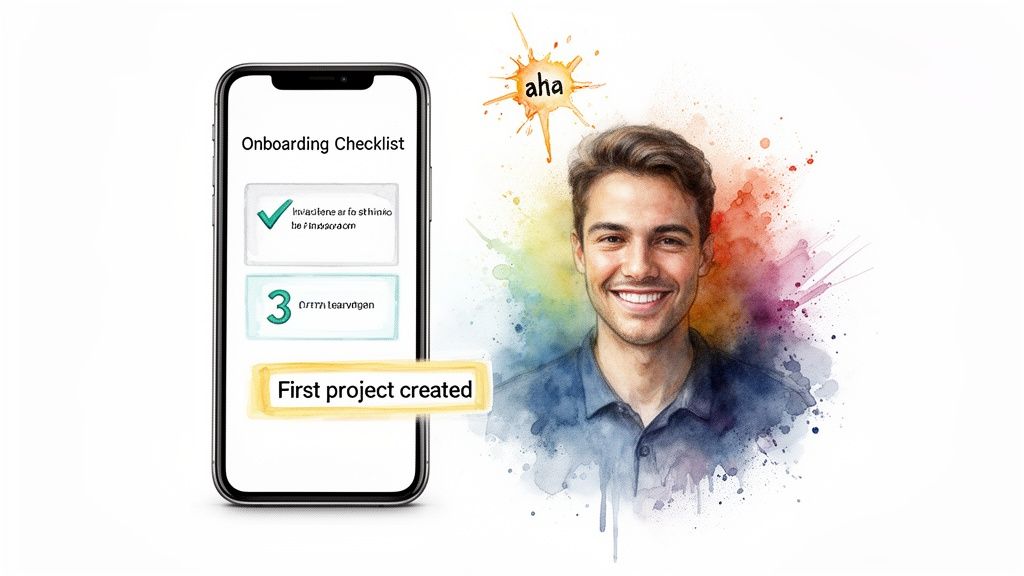
For SaaS and product-led companies, conversion doesn't end at sign-up; it truly begins with user activation. Onboarding optimisation is the process of designing a streamlined initial experience that guides new users to their “aha moment” as quickly as possible. This is the point where they first grasp the core value of your product, which directly correlates with long-term retention and their likelihood to convert from a trial or freemium plan.
Effective onboarding isn't about showing off every feature. Instead, it focuses on removing friction from setup, providing just-in-time guidance, and measuring activation through key early actions. For instance, Slack’s onboarding is famously geared towards getting a user to send their first message, while Notion uses a rich template gallery to help users bypass the intimidating blank page. This approach turns a potentially confusing first interaction into a guided journey towards value.
Why Product Onboarding Optimization is a Top Practice
The first five minutes of a user's experience are the most critical. If users fail to see value or find the initial setup too complex, they are highly unlikely to return. A well-designed onboarding flow is a powerful lever for improving one of the most important conversion rate optimization best practices: converting trial users into paying customers. It acts as your best salesperson, demonstrating product value proactively rather than leaving users to figure it out alone.
Key Insight: Treat your onboarding sequence as a product in itself. It needs its own goals, metrics (like time-to-value and activation rate), and continuous iteration to be effective. The goal is momentum, not a comprehensive feature tour.
How to Implement Onboarding Optimization
Identify the 'Aha Moment': Analyse your most successful users. What key action did they perform in their first session? Define this as your primary activation metric (e.g., creating the first 'zap' in Zapier).
Minimise Time-to-Value: Ruthlessly cut down the steps required to reach that 'aha moment'. Aim to get users there in under five minutes. Use smart defaults, pre-filled templates, and skip options to reduce cognitive load.
Use Progress Indicators: Checklists or progress bars create a sense of accomplishment and show users a clear path forward. This gamification encourages them to complete the essential setup tasks.
Design for Empty States: A blank dashboard can be paralysing. Design your empty states to be instructional, providing clear calls-to-action and guidance on what to do next.
Segment Your Onboarding: Not all users are the same. Create tailored onboarding flows for different user personas or use cases. For example, a power user may want a different path than a casual user. To dive deeper, explore these customer onboarding best practices for SaaS growth to refine your strategy.
10. Analytics, Attribution, and Data-Driven Iteration
Effective conversion rate optimisation is impossible without a robust measurement infrastructure. This practice involves tracking user journeys across all touchpoints to attribute conversions to specific marketing efforts and product experiences. By establishing a reliable feedback loop-measure, analyse, hypothesise, test, and measure again-growth teams can move beyond guesswork and make decisions based on empirical evidence.
This foundational approach requires clear KPI definitions aligned with business goals, sophisticated attribution modelling, and deep user behaviour analysis. Platforms like Google Analytics 4, Mixpanel, and Segment enable businesses to track every interaction, from an initial ad click to final purchase. This complete view allows teams to identify high-value customer segments and pinpoint the early engagement signals that predict eventual conversion, making it a cornerstone of any successful CRO programme.
Why Data-Driven Iteration a Top Practice
Without accurate data, optimisation is just a series of random changes. A solid analytics foundation reveals not just what is happening on your site, but why. For example, HubSpot's advanced attribution reporting helps them understand which marketing channels don't just drive leads, but drive the highest-value customers over their lifetime. This insight allows them to allocate their budget more effectively for long-term growth.
Key Insight: True CRO mastery comes from adopting a philosophy of continuous improvement fuelled by analytics. This is often referred to as data-driven design, where quantitative and qualitative insights guide every single product and marketing decision.
How to Implement a Data-Driven Approach
Define Primary KPIs: Start by defining 2-3 primary key performance indicators that are directly tied to your business objectives, such as Customer Acquisition Cost (CAC), Lifetime Value (LTV), or time-to-value.
Implement Comprehensive Event Tracking: Go beyond page views. Set up event tracking for all critical user interactions, including sign-ups, feature usage, and support ticket submissions to build a complete user journey map.
Track Micro-conversions: Identify and monitor smaller actions (e.g., email opens, video plays, trial feature engagement) that are predictive of a final macro-conversion. These leading indicators provide early feedback on user engagement.
Use Cohort Analysis: Group users by shared characteristics like acquisition source or sign-up date. Comparing conversion rates across these cohorts helps you identify your most valuable acquisition channels and user segments.
Build Public Dashboards: Create and share dashboards displaying key funnel metrics across the company. This transparency builds accountability and ensures everyone is aligned on the most important numbers.
10-Point CRO Best Practices Comparison
Method | Implementation complexity | Resource requirements | Expected outcomes | Ideal use cases | Key advantages |
|---|---|---|---|---|---|
A/B Testing and Multivariate Testing | Medium — requires experimentation platform and stats rigor | Moderate traffic volume; analytics integration; product/engineering time | Measurable, incremental conversion lifts; validated improvements | High-traffic pages, headline/CTA/copy experiments, funnel optimizations | Removes guesswork; quantifiable ROI; scalable experiments |
Funnel Analysis and Conversion Funnel Optimization | High — needs end-to-end tracking and attribution | Data engineering, analytics tools, cross-team alignment | Identifies drop-offs and prioritizes high-impact fixes | Product-led growth, multi-step user journeys, cohort analysis | Pinpoints bottlenecks; directs resources to biggest ROI stages |
Landing Page Optimization and Conversion-Focused Design | Low–Medium — design and copy work; optional testing | Designers, copywriters, landing page builders, paid traffic budget | Large conversion gains; improved CPA and message-fit | Paid campaigns, product launches, audience-specific offers | Rapid CRO wins; improves paid efficiency and message-market match |
Form Field Optimization and Friction Reduction | Low — front-end changes and UX tweaks | Small engineering effort; analytics for measurement | Immediate conversion uplifts from reduced friction | Signup forms, lead capture, trial onboarding | High ROI per change; quick to implement and iterate |
Personalization and Segment-Specific Messaging | High — requires segmentation and dynamic delivery infrastructure | CDP/personalization tools, content variations, privacy compliance | Significant conversion and LTV lifts when done well | Multiple personas, enterprise vs SMB, targeted campaigns | Relevance-driven lift; lowers CAC and increases retention |
Social Proof and Trust Signal Optimization | Low–Medium — content sourcing and legal approvals | Customer success collaboration; testimonial/video production | Higher trust, shorter sales cycles, improved conversion | Enterprise sales, homepage, landing pages, trust-sensitive flows | Strong credibility boost; supports enterprise and mid-market deals |
Call-to-Action (CTA) Optimization and Placement | Low — copy/design tweaks; simple A/B tests | Minimal design/dev; testing tools | Incremental CTR and conversion improvements | Any conversion touchpoint (web, email, in-app) | Low-cost, fast wins; universally applicable |
Email Marketing Optimization and Nurture Sequences | Medium — automation and deliverability setup | Email platform, copy/design, list building and segmentation | High ROI; improved trial-to-paid and re-engagement rates | Onboarding, nurture campaigns, cart recovery, retention | Scalable engagement channel; excellent measurable ROI |
Product Onboarding Optimization and Activation Design | Medium–High — in-app guidance and instrumentation | Product design/dev, analytics, onboarding content | Faster activation, higher trial-to-paid conversion, reduced churn | Freemium/trial products, product-led growth motions | Accelerates time-to-value; increases adoption and retention |
Analytics, Attribution, and Data-Driven Iteration | High — tracking, modeling, and data engineering | Analytics team, CDP/BI tools, data pipelines | Reliable attribution, predictive insights, better allocation | Scaling companies, multi-channel acquisition, experimentation programs | Foundation for measured growth; reduces strategic guesswork |
Building Your Flywheel: From Best Practices to Business Impact
Navigating the landscape of conversion rate optimisation best practices can feel like assembling a complex engine. You have all the components laid out before you: the precision of A/B testing, the diagnostic power of funnel analysis, the persuasive art of landing page design, and the subtle mechanics of CTA optimisation. Each piece, from friction reduction in forms to building trust with social proof, is critical. Yet, simply possessing the parts is not enough. The true magic happens when you connect them, creating a system that runs not on guesswork, but on empirical evidence and a deep understanding of your customer.
The journey we have explored is not about executing a checklist and declaring the job finished. It is about instilling a culture of continuous improvement, a new operational rhythm for your marketing, product, and sales teams. You are shifting from launching campaigns and hoping for the best, to building a predictable, scalable growth machine. This is the fundamental promise of CRO: transforming your go-to-market strategy from a linear, often leaky, pipeline into a powerful, self-reinforcing flywheel where every improvement fuels the next.
From Insights to Action: Your Next Steps
The difference between a company that dabbles in CRO and one that masters it lies in the commitment to a structured process. Merely knowing that you should optimise your email nurture sequences or personalise your messaging is not the same as implementing a rigorous, hypothesis-driven testing programme to do so. The most successful organisations do not leave growth to chance; they engineer it.
To translate the principles in this guide into tangible business impact, consider these immediate, actionable steps:
Conduct a CRO Audit: Begin by mapping your primary conversion funnel, from initial awareness to final purchase or activation. Use analytics to identify the single biggest drop-off point. This is your starting line, the area of highest potential impact.
Formulate Your First Hypothesis: Based on your audit, create a clear, testable hypothesis using a simple framework: “If we change [Independent Variable] for [Specific Segment], we believe it will cause [Expected Outcome] because [Underlying Rationale].” For example, “If we change the primary CTA on our pricing page from 'Get Started' to 'Start Your Free 14-Day Trial', we believe it will increase trial sign-ups because it clarifies the immediate next step and removes ambiguity.”
Choose Your Weapon: Select the right tool for the job. Is this a simple A/B test on a headline, or a more complex multivariate test on a pricing grid? Does it require a UX change based on user feedback, or a copy tweak based on analytics data? Start with the lowest-effort, highest-potential-impact test to build momentum.
Define Success and Measure Rigorously: Before you launch, define what a “win” looks like. Is it a 5% uplift in click-through rate? A 10% reduction in form abandonment? Ensure your analytics and attribution models are configured correctly to measure the result accurately and confidently.
The True Value of Relentless Optimisation
Mastering these conversion rate optimisation best practices delivers far more than just incremental gains on a dashboard. It fundamentally changes your relationship with your customers. You move from making assumptions about their needs to actively listening to their behaviour. Every test is a conversation, every result a piece of feedback that makes your product, messaging, and user experience more relevant and valuable.
This customer-centric approach is what builds enduring brands. It’s the force that lowers customer acquisition costs, increases lifetime value, and creates a competitive moat that is incredibly difficult for others to replicate. By embedding this data-driven, iterative mindset into your company’s DNA, you are not just optimising a website; you are building a resilient, adaptable business poised for sustainable, long-term growth. Begin with one test, one funnel stage, one landing page, and build your flywheel from there.
Ready to transform these best practices into a powerful, predictable growth engine for your business? Ryesing Limited specialises in architecting and executing data-driven CRO programmes that blend strategic expertise with AI-enabled workflows to help ambitious brands scale. Visit Ryesing Limited to see how we build high-performance marketing systems that deliver measurable results.
What is the difference between A/B testing and multivariate testing?
A/B testing compares two versions of a page by changing a single variable (like a headline) to measure its specific impact. Multivariate testing examines multiple variables and their combinations simultaneously to see how they interact and which overall combination performs best.
How does funnel analysis help improve conversion rates?
Funnel analysis maps the entire customer journey to identify “leaks” where users drop off. By pinpointing high-friction stages—such as a complex checkout or confusing onboarding—you can prioritize fixes that offer the highest return on investment.
Why is reducing form fields considered a high-ROI CRO practice?
Every additional field in a sign-up or contact form increases cognitive load and friction. By systematically removing non-essential fields, you lower the barrier to entry, which directly leads to higher submission rates and lower customer acquisition costs.
What is the “Aha! Moment” in product onboarding?
The “Aha! Moment” is the specific point during onboarding where a new user first realizes the core value of your product. Optimizing the user experience to reach this moment as quickly as possible (reducing “Time-to-Value”) is critical for converting trial users into paying customers.
What are “micro-conversions” and why should I track them?
Micro-conversions are small commitments users make before a final sale, such as watching a demo video, reading reviews, or adding an item to a wishlist. Tracking this provides valuable insights into user intent and helps you optimize the smaller steps that lead to a major conversion.